

Colosseum + APP audio guide of the city of Rome
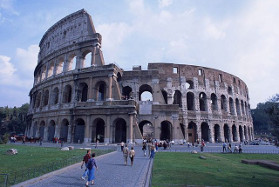
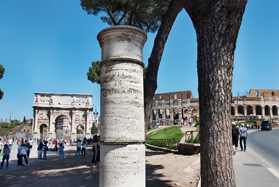
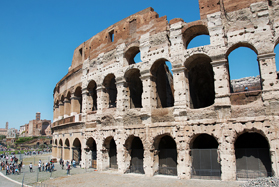
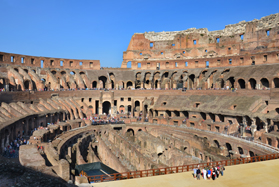
A little history of the Roman Colosseum
The construction of the Flavian Amphitheater, better known as the Roman Coliseum, began around AD 7 under the Emperor Vespasian. The Coliseum was built in a valley, having dried a small lake that Nero used for the Domus Aurea, between the hills of the Palatine, Esquiline and Celio. The Emperor Titus inaugurated the Colosseum in the year 80, but 2 years later finished the works that included the last floor.
The Colosseum became the largest Roman amphitheater, with an elliptical structure of 188 meters long, 156 meters wide and 57 meters high. Made in brick and covered with travertine was divided into five levels with a capacity for more than 50,000 people. Its areas were delimited depending on the social class, the closer to the arena they were the greater the rank to which they belonged.
In the nineteenth century, work was done on the settlement and remodeling of the Coliseum, and although during World War II suffered the effects of the attacks, this majestic and imposing monument has become a cultural asset of the city and the world surviving the time and wars.
What is the Colosseum nowadays?
Even though the Roman Coliseum is now in ruins, it continues to impress us because of its great size and beauty and that is why since 2007 it is considered one of the Seven Wonders of the Modern World.
The Roman Colosseum is now the symbol of Rome in the world, and has become through the years a historical and archaeological treasure able to remind us of the greatness of the Roman Empire. According to a calculation made by the Ministry of Culture, Flavio Amphitheater receives 6 million visitors a year and ranks first among the most visited monuments in Italy.
Curiosities of the Roman Colosseum
Did you know that for the inauguration of the Roman Colosseum a party was organized that lasted 100 days and in it died dozens of gladiators? In the year 80 AD the Roman Colosseum was inaugurated after three years of work. Cassius Dio, historian, said that during the inaugural games of the Colosseum 9,000 animals, both trained and savage, perished.
Did you know that the entrance to the Colosseum serves to enter 3 museums? With the entrance to the Roman Coliseum you can also enter the Palatine and Roman Forum, it is also a valid entry for 2 days from the first use.
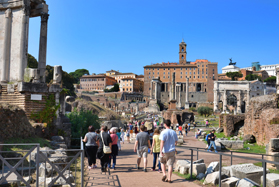
The Roman Forum is a true sanctuary of Ancient Rome where once the basilicas, the temples, the Senate Curia, the Speakers' Tribune or the House of the Vestals were once erected. Today we can see only its ruins but you can relive its history in each of these magnificent settings. Over the valley of the Roman Forum lies the Palatine Hill, where you can find the ruins of the imperial residence whose construction was initiated by Augustus and completed by his successors, here you can tour the courtrooms, basilicas, underground galleries, etc.
Why visit the Roman Colosseum?
The Roman Colosseum is part of the history of an empire that for the pleasure of the residents of Rome organized fights between gladiators or against wild animals and fabulous shows called "naumachie", that were real naval fights in the Sand full of water. Beneath the Arena of the Colosseum, numerous corridors and rooms housed gladiators and ferocious beasts that could be carried to the center of the Arena thanks to a series of elevators and ramps.
How to visit the Colosseum?
The Colosseum, probably the most famous monument in the world, offers different options to people who wish to visit and discover the secrets of the Ancient Rome. Given the high traffic of visitors, the reservation of tickets is highly recommended to avoid the long lines at the entrance. In addition to the simple entrance, which also allows you to visit the Roman Forum and the Palatine, it is possible to participate in a guided group tour of the Colosseum or in a Imperial tour that also includes a bus tour to reach Piazza Venezia (Venice Square). It is also possible to request a private guide to visit completely the archaeological site.
Very close to the Colosseum is the Roman Forum where you can’t miss:
- The two Triumphal Arches where it stands out that of Tito because of its historical importance and size. It commemorates the triumph of Titus on the Jews in the year 70.
- The Temple of the Dioscuri (Castor and Pollux) which with its three Corinthian columns have become an icon of Ancient Rome
- The Basilica of Massenzio with its imposing structure
- The Casa delle Vestali with its evocative internal courtyard where we can recreate the life of the only female priestesses of Rome whose mission was linked to the destiny of the city.
Very close to the Roman Colosseum is also the Castel Sant'Angelo, a fortress that also functioned as a palace, where the Popes spent long periods during difficult times. For this reason it has noble rooms, enriched with elegant Renaissance frescoes.
You may be interested in:
Uffizi (Florence), St Mark's Basilica (Venice) or The Last Supper (Milan).


Customers who have seen this museum also viewed:
Useful Information
The Colosseum is open from 8.30 am to one hour before sunset depending on the season:
8:30 am - 3:30 pm from the last sunday of October to February 15
8:30 am - 4:00 pm from February 16 to March 15
8:30 am - 4:30 pm from March 16 to last Saturday of March
8:30 am - 6:15 pm from last Sunday of March to August 31
8:30 am - 6:00 pm from September 1 to September 30
8:30 am - 5:30 pm from October 1 to last saturday of October
The Ticket office closes one hour before closing time.
Closed on January 1st and December 25th.
Discover the most suggestive museums of Rome:

+39 055713655
Reach the museums in total comfort with our transfer service!

TRANSFER SERVICE
book now
